


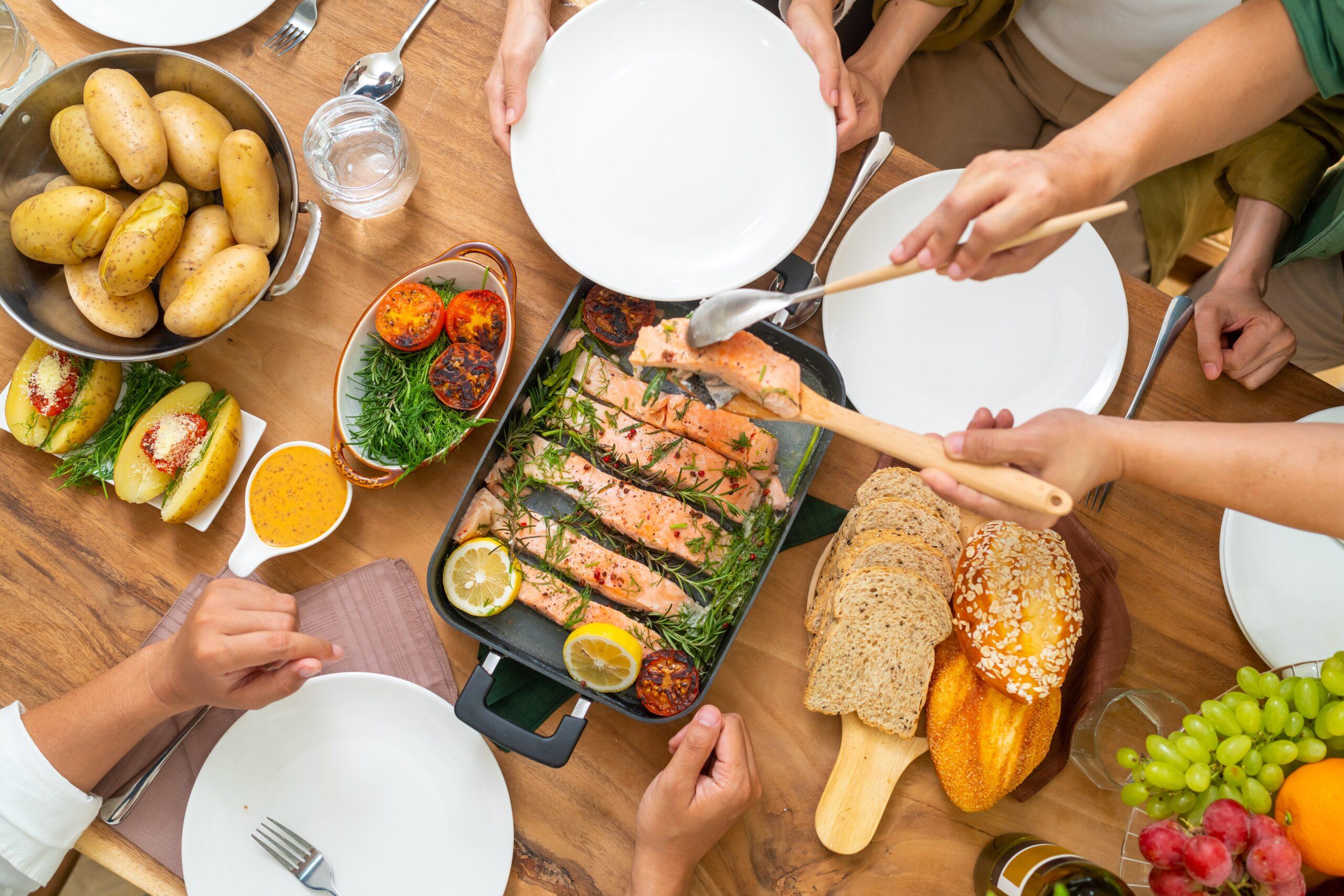
Do you avoid going to friends’ dinners or family parties for fear of losing control of your diet?
Do you feel guilty about eating out, as if you were ruining all your efforts?
Do you believe that nutritional monitoring is incompatible with dinners, parties and events?
If you answered “yes” to any of these questions, know that the problem is not your social life, but your lack of tools to manage it. Balance doesn’t require isolation. It does require strategy.
The mathematics of weight: understanding your body for lasting results
Before practical tips, it’s essential to understand how the body works.
Weight balance depends on the relationship between energy intake and energy expenditure:
| Energy intake | Energy expenditure |
| Energy we get from food and drink | Total calories that the body uses to maintain vital functions, digest food and carry out daily activities, including exercise . |
We gain weight when our intake is greater than our expenditure and we lose weight when we create a calorie deficit, i.e. our intake is less than our energy expenditure.
However, it’s important to realize that eating fewer calories doesn’t necessarily mean eating less food. The nutritional quality and energy density of food make all the difference:
| Energy Density | Nutritional Density |
| Energy value (calories) per gram. Associated with higher calorie foods, higher saturated fat, sugar and salt content – harmful to our health. Example: confectionery, alcoholic drinks, soft drinks, fried foods |
Ratio of nutrients to energy. Foods with high nutrient density are rich in vitamins and minerals and have few calories. Example: vegetables, fruit, legumes |
Whether at home or in social contexts, the key is nutritional density. Choosing nutrient-rich foods, adjusted to individual needs, promotes satiety and health, allowing the calorie deficit for weight loss to happen naturally and sustainably.
6 strategies for living together without guilt
Throughout my clinical practice, these strategies have proved most effective in dealing with some of the most common challenges:
- Managing starters: Often, by the time the main course arrives, we’ve already consumed the calories of a full meal in bread, butter and snacks. Choose only what you really value.
- Personalize your portion: Restaurants serve the same amount to everyone, regardless of their needs. Don’t be ashamed to ask for a smaller portion or to stop eating as soon as you feel full.
- Physical hunger vs. Hedonic hunger: Before dessert, ask yourself: “Am I hungry or do I just want the pleasure of sugar?”
- Alcohol in moderation: Beer, wine or sangria don’t have to be the norm. Try to leave alcoholic drinks for really special moments rather than every get-together.
- Nuts (peanuts, walnuts, etc.): Although interesting nutritionally, at a get-together, it’s easy to overeat without realizing it. Monitor your portions.
- Lupins: Like all legumes, they have a high nutritional density. They are a strategic and nutritious snack, you just have to watch the quantities you eat
The golden rule: educate your social circle
The last tip is the most important: sharing your goals allows friends and family to support and contribute to healthy choices. The aim is not to say “no” to socializing, but to relearn how to socialize. The secret lies in knowing how to distinguish the exception from the rule.
Don’t put it off, invest in yourself now.
Sometimes, even when you think you’re making the right choices, the results don’t show. If you feel that social gatherings, dinners or parties end up making it harder to stay focused, and you need a personalized plan that adapts to your routine – and not the other way around – I’m here to help.